
2026-05-23: Finance Daily Briefing: PCE Watch, Weekend Oil Risk, Dollar Pressure, and the Rally Test
Today's finance briefing is a weekend risk map. U.S. cash markets are coming off a strong Friday and will be closed Monday for Memorial Day, so investors enter the break with three unresolved questions: whether oil headlines change before Tuesday, whether next week's PCE data confirms inflation pressure, and whether the equity rally can keep absorbing higher-for-longer rate risk.
Executive Summary
Reuters' week-ahead coverage warned that soaring U.S. stocks could face a rocky patch as earnings season winds down and yields perk up. Oil remains the main geopolitical input, the dollar is still near a six-week high, and yen weakness keeps intervention risk on the screen. The market is not short of bullish catalysts, but it is more dependent on clean macro data than it looked earlier in the AI-led rally.
1. Week-Ahead Focus Turns to PCE Inflation
Reuters reported that investors are watching next week's PCE release, the Federal Reserve's preferred inflation gauge, after other price data showed elevated pressure. The report noted that months of higher oil prices and supply disruptions may be starting to flow into inflation readings.
This matters because Friday's rally depended partly on yields cooling. If PCE confirms that energy and supply pressure are leaking into core inflation, traders may again price a more hawkish Fed path. That would raise the hurdle for growth stocks and weaken the case for broad multiple expansion.
Watch next: core PCE, services inflation, market-implied Fed probabilities, and whether the 10-year yield returns toward this week's stress levels.
Original source: Reuters via The Economic Times - Soaring stocks could face rocky patch as earnings wind down, yields perk up
2. Long Weekend Leaves Oil Risk Open
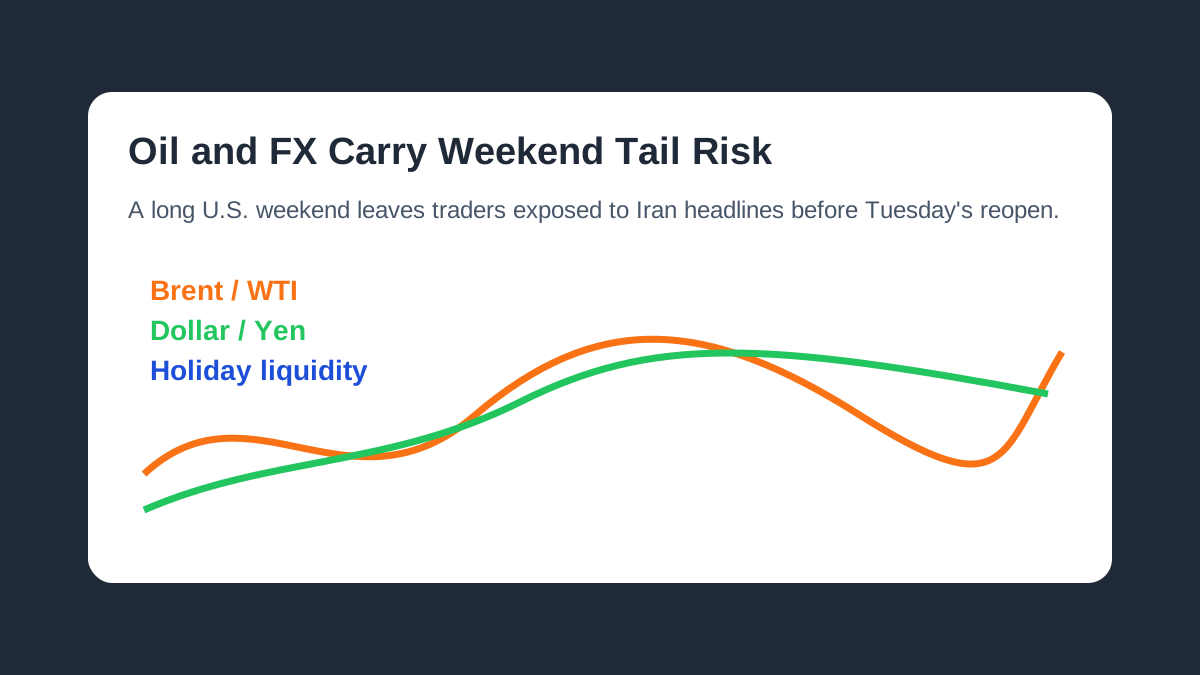
Reuters reported Friday that oil climbed as investors doubted a fast breakthrough in U.S.-Iran peace talks, even though crude benchmarks still ended lower for the week. U.S. stock and bond markets will be closed Monday, leaving traders exposed to geopolitical headlines before Tuesday's reopen.
This is the weekend risk that matters most for cross-asset pricing. If talks improve, lower oil can ease inflation expectations and support bonds. If talks deteriorate, crude could reprice before U.S. markets reopen, leaving equities to catch up after the holiday.
Watch next: Brent and WTI futures Sunday night, confirmed shipping conditions around the Strait of Hormuz, and whether oil-sensitive sectors gap higher or lower when U.S. markets reopen.
Original sources: Reuters via EnergyNow - Oil prices settle higher on slow progress in U.S.-Iran peace talks and Reuters via LSE - Stocks climb, yields dip as investors focus on U.S.-Iran talks
3. Dollar Strength Keeps Yen Intervention Risk Alive
Reuters reported that the dollar remained near a six-week high as U.S.-Iran uncertainty supported demand for the currency. The yen was around the weaker side of 159 per dollar, close enough to the 160 area that traders remain alert to Japanese intervention risk.
The dollar story connects directly to funding conditions. A stronger dollar tightens financial conditions globally, particularly for emerging markets and dollar borrowers. Yen weakness can also destabilize carry trades if authorities step in.
Watch next: USD/JPY around 160, Japanese finance ministry comments, oil prices, and Treasury yields after the U.S. holiday.
Original source: Reuters via Investing.com - Dollar perched near six-week high on uncertainty over U.S.-Iran deal
4. U.K. Data Shows Energy Shock Hitting Consumers
Reuters reported that U.K. retail sales fell 1.3% in April, the steepest monthly decline in nearly a year, with fuel sales falling sharply. Reuters also noted that the data added to signs of weaker consumer spending against the backdrop of the Iran war and rising energy costs.
This matters because the oil shock is not just a market chart. It is moving into real-economy behavior. If consumers respond to higher fuel costs by cutting spending, central banks face a difficult mix of weaker demand and stronger inflation pressure.
Watch next: Bank of England communication, U.K. wage and inflation data, consumer discretionary earnings, and whether the pound remains soft against the dollar.
Original source: Reuters via MarketScreener - U.K. retail sales drop by most in nearly a year
5. Japan's Inflation Slowdown Complicates the BOJ Path
Reuters reported that Japan's core consumer inflation slowed to 1.4% in April, the weakest pace in four years, partly because of subsidies. Analysts still expect higher fuel costs from the Middle East conflict to lift price growth in coming months.
The BOJ's problem is timing. A soft inflation print weakens the immediate case for rate hikes, but a weak yen and imported energy costs can quickly revive inflation pressure. That mix keeps yen intervention and BOJ normalization risk linked to global oil.
Watch next: Japan fuel subsidies, USD/JPY, BOJ comments, and whether imported inflation shows up in May and June data.
Original source: Reuters via Investing.com Australia - Japan's core inflation slows to four-year low
What This Means
The weekend setup is bullish but brittle. Stocks have recovered, AI and enterprise technology remain strong, and yields eased enough to let risk appetite breathe. But the rally now needs three things to go right: no oil shock over the weekend, a manageable PCE print next week, and a dollar move that does not force currency-market stress.
For analysts, the useful framework is still cross-asset sequencing: energy -> inflation -> bonds -> dollar -> equity valuation -> earnings confidence. The market can rally through uncertainty, but it cannot ignore that chain for long.
Source List
- Reuters via The Economic Times - Soaring stocks could face rocky patch as earnings wind down, yields perk up
- Reuters via EnergyNow - Oil prices settle higher on slow progress in U.S.-Iran peace talks
- Reuters via LSE - Stocks climb, yields dip as investors focus on U.S.-Iran talks
- Reuters via Investing.com - Dollar perched near six-week high on uncertainty over U.S.-Iran deal
- Reuters via MarketScreener - U.K. retail sales drop by most in nearly a year
- Reuters via Investing.com Australia - Japan's core inflation slows to four-year low